How to Gain Massive Traffic

To gain massive traffic, you can follow these steps:

  1. Optimize your website for search engines (SEO)
  2. Create high-quality and shareable content
  3. Utilize social media to promote your content
  4. Engage with your audience and build a community
  5. Collaborate with other websites and influencers in your niche
  6. Use pay-per-click advertising (PPC)
  7. Invest in email marketing
  8. Leverage user-generated content
  9. Utilize multimedia, such as videos and images
  10. Monitor your analytics and continuously improve your strategy.

Direct Traffic

Direct traffic refers to visitors who access your website directly by typing the URL into their browser or clicking a bookmark. This type of traffic is often seen as high-quality and valuable, as these visitors have a specific intention in mind when they visit your site. To increase direct traffic, you can:

  1. Improve your website’s user experience
  2. Promote your website’s URL through offline marketing efforts
  3. Encourage bookmarking by providing useful and shareable content
  4. Improve website load speed
  5. Offer a memorable domain name and create a brand
  6. Provide useful and engaging content regularly to encourage repeat visits
  7. Utilize referral programs to incentivize direct visits from trusted sources.

Referral Traffic

Referral traffic refers to visitors who come to your website from a different site, typically by clicking a link. To increase referral traffic, you can:

  1. Build partnerships and collaborations with other websites in your industry
  2. Guest post on reputable websites in your niche
  3. Include links to your website in your email signature and online profiles
  4. Encourage your satisfied customers to leave positive reviews and include a link to your site
  5. Create shareable content, such as infographics and blog posts, and include links to your site
  6. Utilize social media to promote your content and build relationships with influencers
  7. Participate in online forums and communities related to your niche
  8. Offer an affiliate program to incentivize others to promote your site
  9. Provide valuable resources, such as tools and whitepapers, and include links to your site.

Organic Traffic

Organic traffic refers to visitors who come to your website through search engines, such as Google or Bing, without paying for the visit. To increase organic traffic, you can:

  1. Optimize your website for search engines (SEO)
  2. Create high-quality and relevant content
  3. Use targeted keywords in your content and meta tags
  4. Utilize header tags and internal linking to improve website structure
  5. Encourage other websites to link to your site (backlinks)
  6. Utilize social media to promote your content and build relationships with influencers
  7. Continuously monitor and improve your website’s performance through analytics
  8. Stay up-to-date with the latest search engine algorithms and best practices.

Social Traffic

Social traffic refers to visitors who come to your website through social media platforms, such as Facebook, Twitter, or LinkedIn. To increase social traffic, you can:

  1. Create high-quality and shareable content
  2. Utilize social media to promote your content
  3. Engage with your audience and build a community on social media
  4. Collaborate with influencers in your niche on social media
  5. Utilize multimedia, such as images and videos, to capture attention on social media
  6. Run social media advertising campaigns to reach a larger audience
  7. Offer exclusive content or promotions for your social media followers
  8. Respond promptly to comments and messages to build a positive reputation on social media.

Paid Traffic

Paid traffic refers to visitors who come to your website through paid advertising, such as pay-per-click (PPC) or display ads. To increase paid traffic, you can:

  1. Utilize pay-per-click advertising on search engines and social media platforms
  2. Create targeted and relevant advertisements
  3. Continuously test and optimize your ads for maximum performance
  4. Utilize retargeting ads to reach visitors who have already shown an interest in your site
  5. Utilize display advertising on websites related to your niche
  6. Set a budget for your advertising campaigns and monitor your spending
  7. Utilize A/B testing to determine the most effective ad copy and targeting options
  8. Continuously monitor and analyze your advertising performance to make informed decisions for future campaigns.

Linking to another site’s page

Linking to another website’s page, also known as an outbound link or external link, is a method of directing your website’s visitors to relevant and credible information on other sites. By linking to other sites, you can:

  1. Provide additional resources and information for your visitors
  2. Establish your website as a credible and trustworthy source of information
  3. Build relationships with other websites in your niche
  4. Improve your website’s search engine optimization (SEO)
  5. Show your visitors that you are not solely focused on promoting your own site.

When linking to other sites, it’s important to link to relevant, credible sources and to use descriptive link text that accurately describes the linked content. Avoid linking to low-quality or spammy sites as this can harm your website’s reputation.

How to Generate Leads through LinkedIn
How to Generate Leads through LinkedIn Sales Navigator?

There are several ways to generate leads through LinkedIn:

LinkedIn is a professional networking platform that allows users to connect with other professionals, search and apply for job opportunities, and showcase their skills, experiences and achievements. It’s a great way to build your professional brand and network with other professionals in your field.

How to Generate Leads through LinkedIn Sales Navigator
  1. Optimize your LinkedIn profile: Make sure your profile is complete and up-to-date, and includes keywords relevant to your industry. This will make it more likely that people searching for products or services like yours will find your profile.
  2. Build a strong network: Connect with potential customers, industry leaders, and other relevant professionals. The more connections you have, the more likely you are to generate leads.
  3. Use LinkedIn groups: Join groups related to your industry and participate in discussions. This will help you build connections and establish yourself as a thought leader.
  4. Share valuable content: Regularly post valuable content (e.g. articles, infographics, videos) on your LinkedIn profile. This will help you attract more followers and generate leads.
  5. Use LinkedIn Ads: Run targeted ads to reach a specific audience, this will increase the chances of converting leads into customers.
  6. Use LinkedIn Sales Navigator: This is a paid tool that allows you to target specific individuals, companies or industries and make your sales process more efficient.

To generate B2B leads on LinkedIn, you can follow these steps:

  1. Optimize your profile: Ensure your LinkedIn profile is complete, professional, and optimized for search engines.
  2. Build your network: Connect with relevant professionals in your industry and target market.
  3. Engage with your network: Share valuable content, like blog posts, articles, and case studies, and participate in group discussions to establish yourself as a thought leader.
  4. Leverage LinkedIn Ads: Use LinkedIn’s advertising platform to target specific job titles, companies, and industries with sponsored content.
  5. Use LinkedIn Sales Navigator: This tool can help you find and connect with potential leads, as well as track your engagement with them.
  6. Participate in groups: Join relevant groups and participate in discussions to build relationships and reach a wider audience.
  7. Offer value: Provide valuable content, like ebooks, webinars, and whitepapers, to attract potential leads and establish trust.

By following these steps and consistently engaging with your network, you can effectively generate B2B leads on LinkedIn.

How To Make Money With Affiliate Marketing

Affiliate marketing is a performance-based marketing strategy in which a business rewards one or more affiliates for each visitor or customer brought about by the affiliate’s own marketing efforts. Affiliates typically promote a business through their own personal networks, websites, or social media channels.

There are several ways to make money with affiliate marketing, and the exact approach will depend on your own skills and resources. However, some common strategies include:

  1. Creating a website or blog: The first step in making money with affiliate marketing is to create a website or blog that is dedicated to a specific niche or topic. This website should be filled with high-quality content that is relevant to your niche, and should include affiliate links to products or services that are related to your content.
  2. Building an email list: Building an email list is an important step in making money with affiliate marketing. This list should be made up of people who have shown an interest in your niche and are likely to be interested in the products or services you are promoting. You can use your email list to promote affiliate products, and to keep your subscribers up-to-date on new products and special offers.
  3. Utilizing social media: Social media can be an effective way to promote affiliate products. Platforms like Facebook, Twitter, and Instagram can help you to build a following and reach a large audience. You can use social media to share affiliate links, create engaging content, and interact with your followers.
  4. Creating YouTube videos: Creating videos on YouTube is another effective way to make money with affiliate marketing. This is a great way to share your expertise and promote affiliate products in a more engaging and interactive way. You can create product reviews, how-to videos, and other types of content that are tailored to your niche.
  5. Creating an affiliate program: Creating your own affiliate program is another way to make money with affiliate marketing. This is a great way to attract other marketers to promote your products and services, and to increase your reach and visibility. You can offer commissions or other incentives to your affiliates to encourage them to promote your products.
  6. Choosing the right products or services to promote: Choosing the right products or services to promote is crucial to making money with affiliate marketing. You should look for products or services that are relevant to your niche and that have a proven track record of success. You should also look for products or services that offer a high commission rate, and that are easy to promote.
  7. Continuously track, analyze and optimize: To be successful in affiliate marketing, you need to continuously track, analyze and optimize your campaigns. By monitoring your campaigns, you can identify which products are performing well and which ones are not. You can also identify which marketing channels are most effective and which ones are not. By analyzing and optimizing your campaigns, you can improve your ROI and maximize your profits.

By following these strategies, you can make money with affiliate marketing. However, it’s important to remember that affiliate marketing takes time, effort and patience. Building a successful affiliate marketing business takes time and requires a significant amount of effort, but with the right approach, it can be a highly profitable way to make money online.

How to Do Keyword Research for SEO
How to Do Keyword Research for SEO for Beginner’s Guide

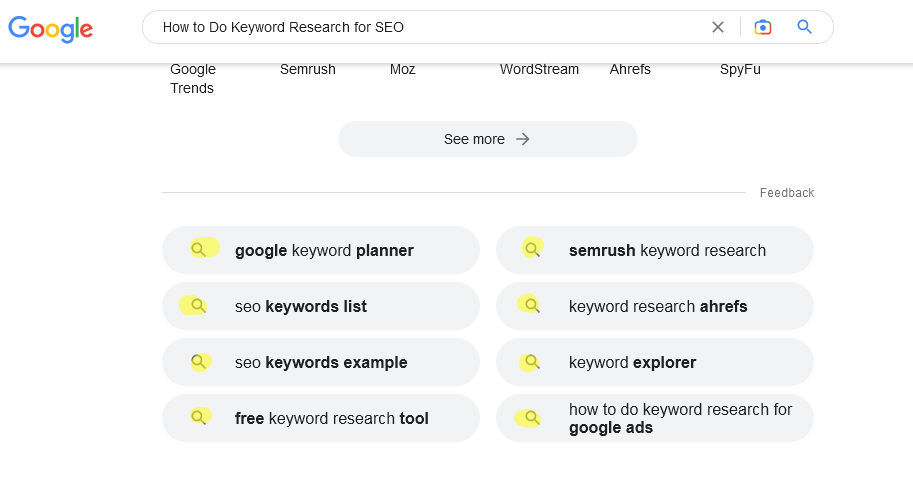
Keyword research is a crucial step in optimizing your website for search engines. By understanding the keywords that people use to find your products or services, you can tailor your website content and meta tags to rank higher in search engine results pages (SERPs). Here’s a step-by-step guide to conducting keyword research for SEO:

Keyword Research
  1. Identify your target audience: The first step in keyword research is to identify the target audience for your website. Consider the demographics, interests, and pain points of your ideal customer.
  2. Brainstorm keywords: Once you have a clear understanding of your target audience, start brainstorming a list of keywords that are relevant to your products or services. Use tools like Google’s Keyword Planner, SEMrush or Ahrefs to get a list of keyword ideas.
  3. Analyze search volume and competition: After you have a list of keywords, use keyword research tools to analyze the search volume and competition for each keyword. Search volume refers to the number of times a keyword is searched for on a monthly basis, while competition refers to the number of websites that are trying to rank for that keyword.
  4. Prioritize keywords: After analyzing search volume and competition, prioritize your keywords based on their relevance and potential to drive traffic to your website. Look for keywords with high search volume and low competition.
  5. Optimize your website: Once you have a list of high-priority keywords, optimize your website for those keywords. Use your keywords in the title tags, meta descriptions, and throughout the content of your website.
  6. Keep an eye on your ranking: Last step is to track your ranking for your target keywords using Google Analytics or other SEO tools. Keep an eye on your ranking and adjust your strategy if necessary.

Keyword research is an ongoing process, and you should continually monitor your website’s performance and adjust your strategy as needed. By following these steps, you’ll be able to identify the keywords that will drive the most traffic to your website, and optimize your content accordingly.

How to Use Content Marketing to Explode Your Business Reach?

Content marketing is a powerful tool for growing your business and expanding your reach. By creating valuable and relevant content, you can attract and engage your target audience, build trust and credibility, and ultimately drive more conversions and sales.

Here are some tips for using content marketing to explode your business reach:

  1. Define your target audience: The first step in creating effective content is to understand who you are trying to reach. Conduct market research to identify your target audience’s demographics, pain points, and interests.
  2. Create a content strategy: Once you know who you are trying to reach, you can create a content strategy that aligns with your business goals and speaks directly to your target audience.
  3. Produce high-quality content: The key to successful content marketing is producing high-quality content that provides value to your audience. This can include blog posts, videos, infographics, ebooks, and more.
  4. Optimize for search: To reach more people, you need to optimize your content for search engines. This includes using keywords in your content and meta tags, as well as building backlinks from other websites.
  5. Promote your content: Once your content is created and optimized, it’s time to promote it. Share it on social media, email it to your subscribers, and reach out to influencers and other websites to ask them to share it as well.
  6. Measure and analyze: Finally, it is important to measure and analyze the performance of your content to see what’s working and what’s not. Use analytics tools to track the number of views, shares, and conversions your content generates, and use this data to improve your strategy.

By following these tips, you can use content marketing to explode your business reach, attract more customers and ultimately drive more conversions and sales.

How to Get More 5-Star Google Reviews for Your Business
How to Get More 5-Star Google Reviews for Your Business?

Google reviews can be a powerful tool for businesses looking to boost their online reputation and attract new customers. Here are a few tips on how to get more 5-star reviews for your business on Google:

  1. Make it easy for customers to leave a review: Include a link to your Google business page in your email signature and on your website. This will make it easy for customers to find and leave a review.
  2. Ask for reviews: After a positive interaction with a customer, consider asking them to leave a review. This can be done in-person, over the phone, or via email.
  3. Respond to reviews: When customers leave a review, whether it’s positive or negative, make sure to respond to it. This shows that you care about your customers’ feedback and are actively working to improve your business.
  4. Provide exceptional service: The best way to get 5-star reviews is to provide excellent service. This means going above and beyond for your customers, being attentive to their needs, and providing a positive experience.
  5. Offer incentives: You could offer incentives for customers who leave a 5-star review, such as discounts or freebies. This can be a great way to encourage more customers to leave a review.
  6. Use Third party review management tools: There are many software’s available which can help you get more reviews by sending automated email or sms to your customer to remind them to leave a review, this way you increase the chances of them leaving a review.

By following these tips, you can increase the number of 5-star reviews your business receives on Google, which can help boost your online reputation and attract more customers. Remember that reviews are an important part of your online presence and should be managed regularly and strategically.

Boost Online Traffic that Converts
How to Boost Online Traffic that Converts in 2023?

There are several strategies you can use to boost online traffic that converts in 2023. Some of these include:

  1. Search engine optimization (SEO): Optimize your website and content for search engines to increase organic traffic.
  2. Content marketing: Create high-quality, valuable content that attracts and engages your target audience.
  3. Social media marketing: Use social media platforms to promote your website and engage with potential customers.
  4. Pay-per-click (PPC) advertising: Use PPC advertising to drive targeted traffic to your website.
  5. Email marketing: Use email marketing to nurture leads and convert them into customers.
  6. Influencer marketing: Partner with influencers in your industry to reach a wider audience.
  7. CRO (Conversion Rate Optimization) : Optimize your website to increase the likelihood that visitors will convert into customers.
  8. Personalization: Use data and technology to personalize the customer experience and increase conversions.

It’s also important to track and analyze your website’s traffic and conversions to understand which strategies are working and which ones need improvement.

why mobile seo is important
Why Is Mobile SEO Important?

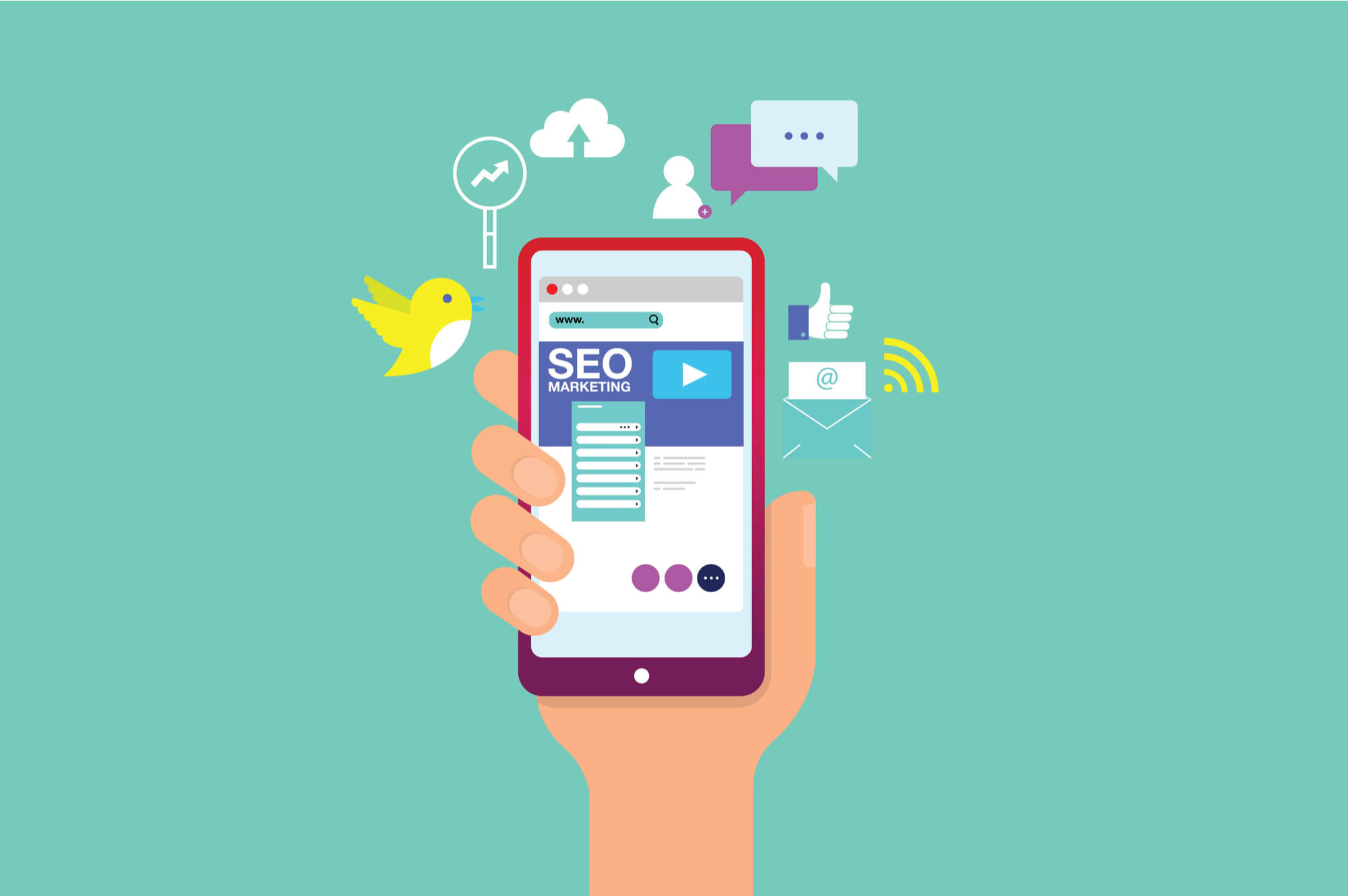
Mobile SEO is important because it ensures that a website is optimized for mobile devices, allowing for a better user experience and improved search engine rankings.

With the increasing popularity of smart phones and tablets, more and more people are accessing the internet on mobile devices. As a result, it’s crucial for businesses to ensure that their website is easily accessible and user-friendly on mobile devices. If a website is not optimized for mobile, it can be difficult to navigate and can lead to a high bounce rate, which can negatively impact search engine rankings.

Additionally, Google has implemented mobile-first indexing, which means that the mobile version of a website is used to determine its search engine rankings. This means that if a website is not optimized for mobile, it will likely have a lower search engine ranking than a website that is optimized for mobile.

Mobile SEO also includes ensuring that the website loads quickly on mobile devices, as slow loading times can also negatively impact search engine rankings and user experience. This can be achieved through techniques such as compressing images, minifying code, and using a content delivery network (CDN).

Another important aspect of mobile SEO is the use of structured data and schema markup. This helps search engines understand the content on a website and can lead to rich snippets and other enhanced search results.

Furthermore, mobile SEO also includes the use of mobile-specific features such as click-to-call buttons and location-based SEO. These features allow mobile users to easily contact a business or find their physical location.

In conclusion, mobile SEO is important for several reasons such as user experience, search engine rankings, mobile-first indexing, fast loading times, structured data and schema markup, mobile-specific features, and location-based SEO. A website that is optimized for mobile devices will provide a better user experience, which can lead to increased website traffic and improved search engine rankings.

Cold Outreach: The Art of Connecting with New Prospects

In today’s competitive business world, cold outreach has become an essential tool for sales and marketing professionals to reach new prospects and generate leads. But what exactly is cold outreach, and how can it benefit your business?

Cold outreach is the process of reaching out to potential customers, clients, or partners who have never had any prior contact or relationship with your business. This approach involves sending unsolicited emails, making cold calls, or connecting with prospects on social media, with the goal of establishing a new business relationship.

Despite the stigma surrounding cold outreach, it can be an effective way to grow your customer base and increase your sales. In fact, research has shown that cold outreach has a much higher conversion rate compared to traditional outbound marketing methods, such as direct mail or advertising.

The key to successful cold outreach is to approach each prospect with a personalized and relevant message. This requires research into your target audience, their pain points, and the solutions you can offer to help solve their problems. By tailoring your message to the individual, you increase the chances of engaging them and establishing a new business relationship.

Another important factor in cold outreach is timing. Timing is crucial when it comes to reaching out to potential prospects. If you reach out at the wrong time, you may end up annoying or alienating them. On the other hand, if you reach out at the right time, you increase the chances of generating a response and establishing a new business relationship.

Additionally, it’s important to remember that cold outreach is a numbers game. The more prospects you reach out to, the higher the chances of generating new business. However, it’s important to maintain a high level of professionalism and ensure that your outreach is in line with ethical and legal guidelines.

In conclusion, cold outreach can be a highly effective way to reach new prospects and generate new business opportunities. With a personalized and relevant message, the right timing, and a professional approach, you can increase your chances of success and grow your customer base. So why not give cold outreach a try and see what it can do for your business?

Boost Visibility of Android Apps on Google Play

The Google Play store is home to millions of apps, making it a competitive landscape for app developers looking to increase visibility and downloads. However, with the right strategies in place, it is possible to boost the visibility of your Android app on the Google Play store.

Here are five key strategies to Boost Visibility of Android Apps on Google Play

  1. Research and Place Targeted Keywords in the Description and Name: Keyword research is crucial to increasing your app’s visibility on the Google Play store. Use tools like the Google Keyword Planner to determine which keywords are relevant to your app, and then place them in your app’s description and name. This will help your app rank higher in relevant search results, making it easier for users to find.
  2. Boost the Visual Appeal of your App: A visually appealing app is more likely to attract attention and downloads. Invest in high-quality graphics and screenshots that showcase your app’s features and functionality, and make sure your app icon is eye-catching and memorable.
  3. Track Your Progress: It’s important to track the performance of your app to understand what’s working and what’s not. Use tools like Google Analytics to monitor your app’s downloads, user engagement, and retention, and make adjustments to your strategies as needed.
  4. Build an Attractive App and Get Good Ratings: A high-quality app with positive reviews will naturally attract more downloads. Make sure your app is bug-free, runs smoothly, and provides a great user experience. Encourage users to leave positive reviews by providing a great in-app experience, and consider offering incentives for positive reviews.
  5. Release Promo Videos: Promo videos are a great way to showcase your app and its features, and can help increase visibility on the Google Play store. Create a short, engaging video that demonstrates your app’s functionality and benefits, and promote it on social media, your website, and other relevant platforms.

By following these five key strategies, you can boost the visibility of your Android app on the Google Play store, increase downloads, and reach your target audience. With the right approach, it’s possible to achieve success and grow your app’s user base on the world’s largest app store.